Welcome to the Drug Repositioning Prediction Model
Knowledge Base (DRPMKB 1.0)
The first AI-oriented platform designed to enhance the personalized applications of large language models (LLM) through data fusion and evolution.
Drug repositioning (DR) reduces the risks and costs of drug development by finding new uses for approved drugs. The rapid growth of AI has led to a surge in computational models in this field. However, without effective integration, excess models can waste resources and obscure valuable ones. While LLM are preferred for their broad applicability, integrating them with a personalized knowledge base can significantly enhance their task-specific accuracy. So, we build the DRPMKB 1.0.
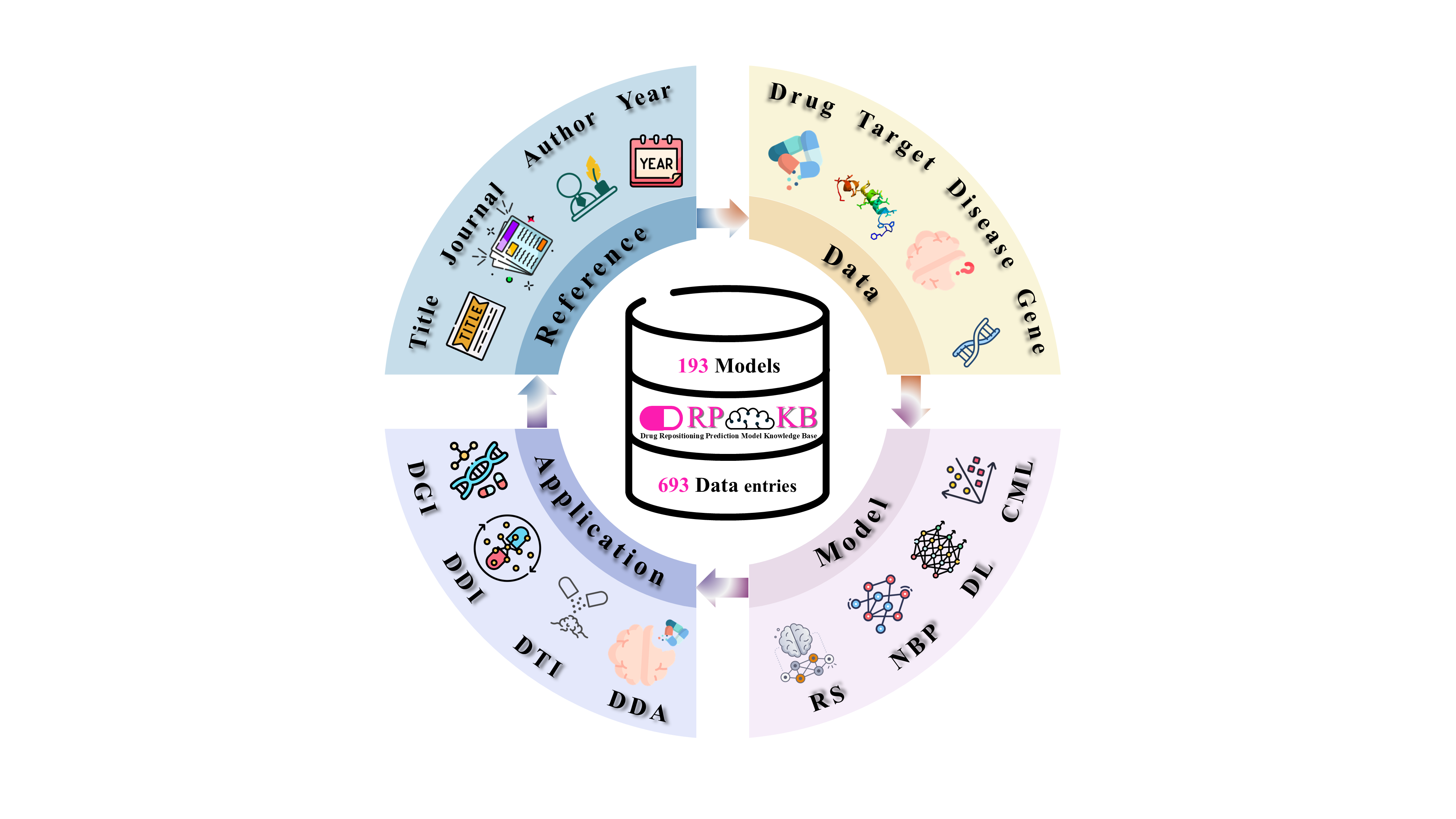
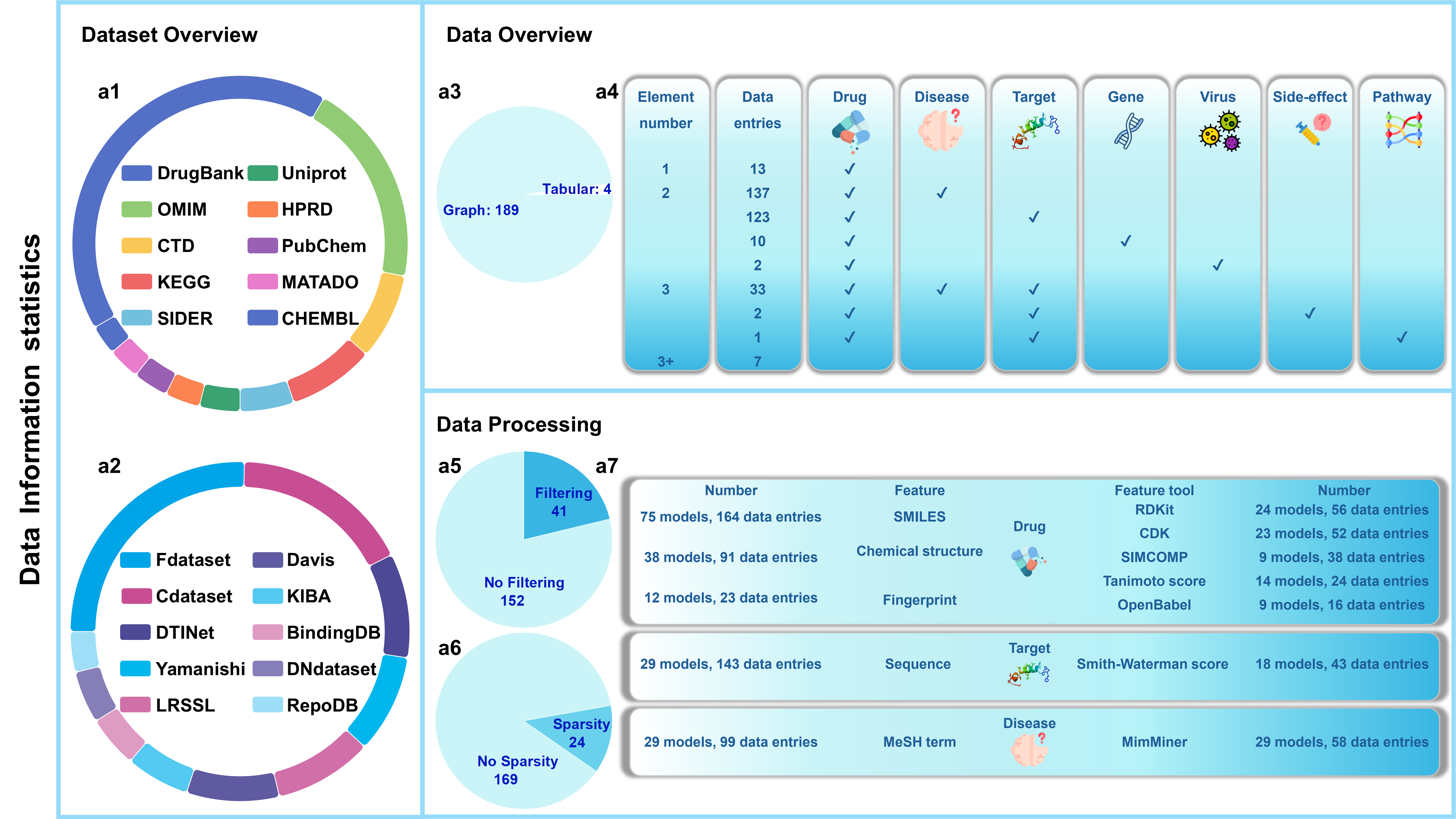
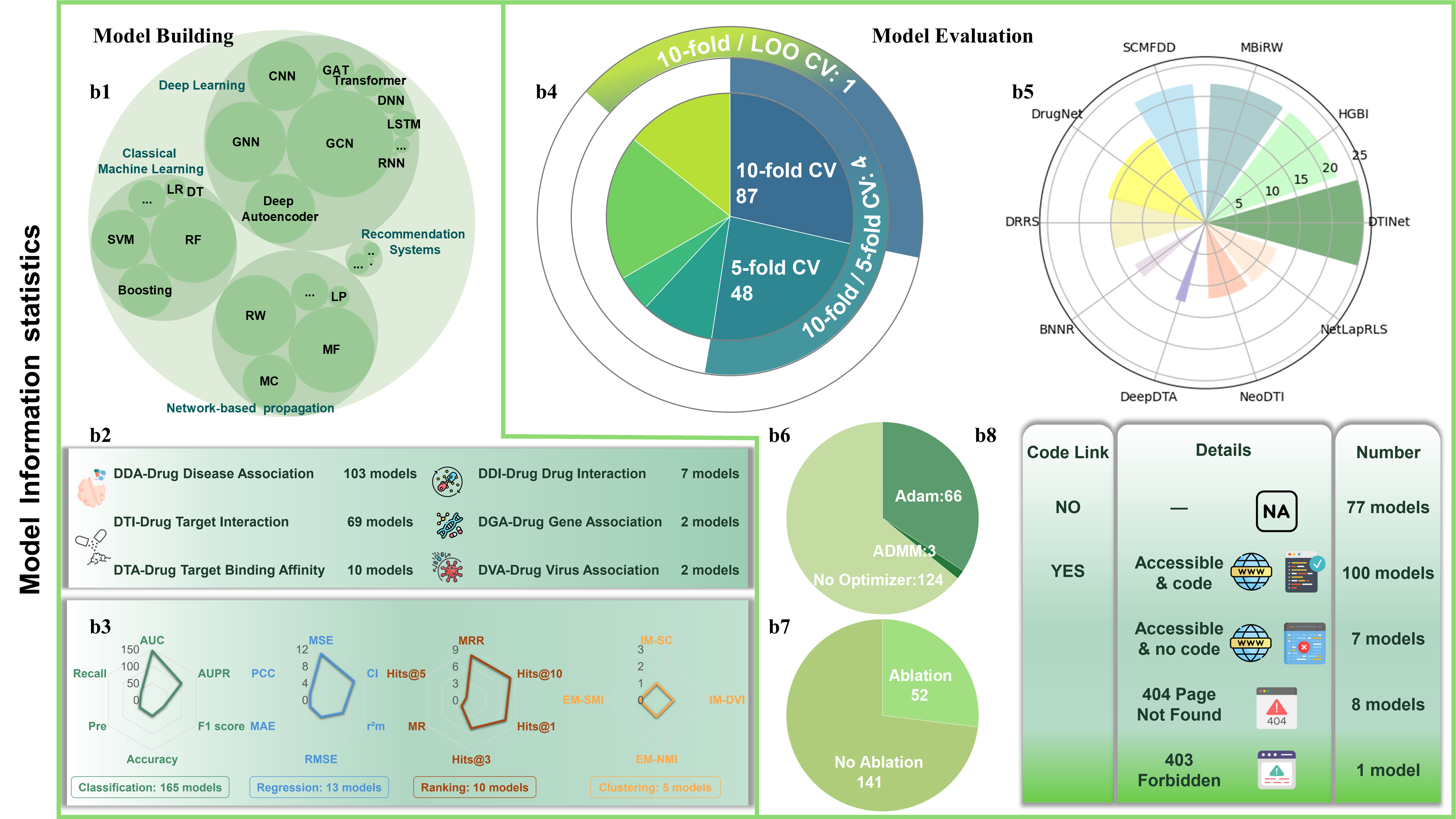
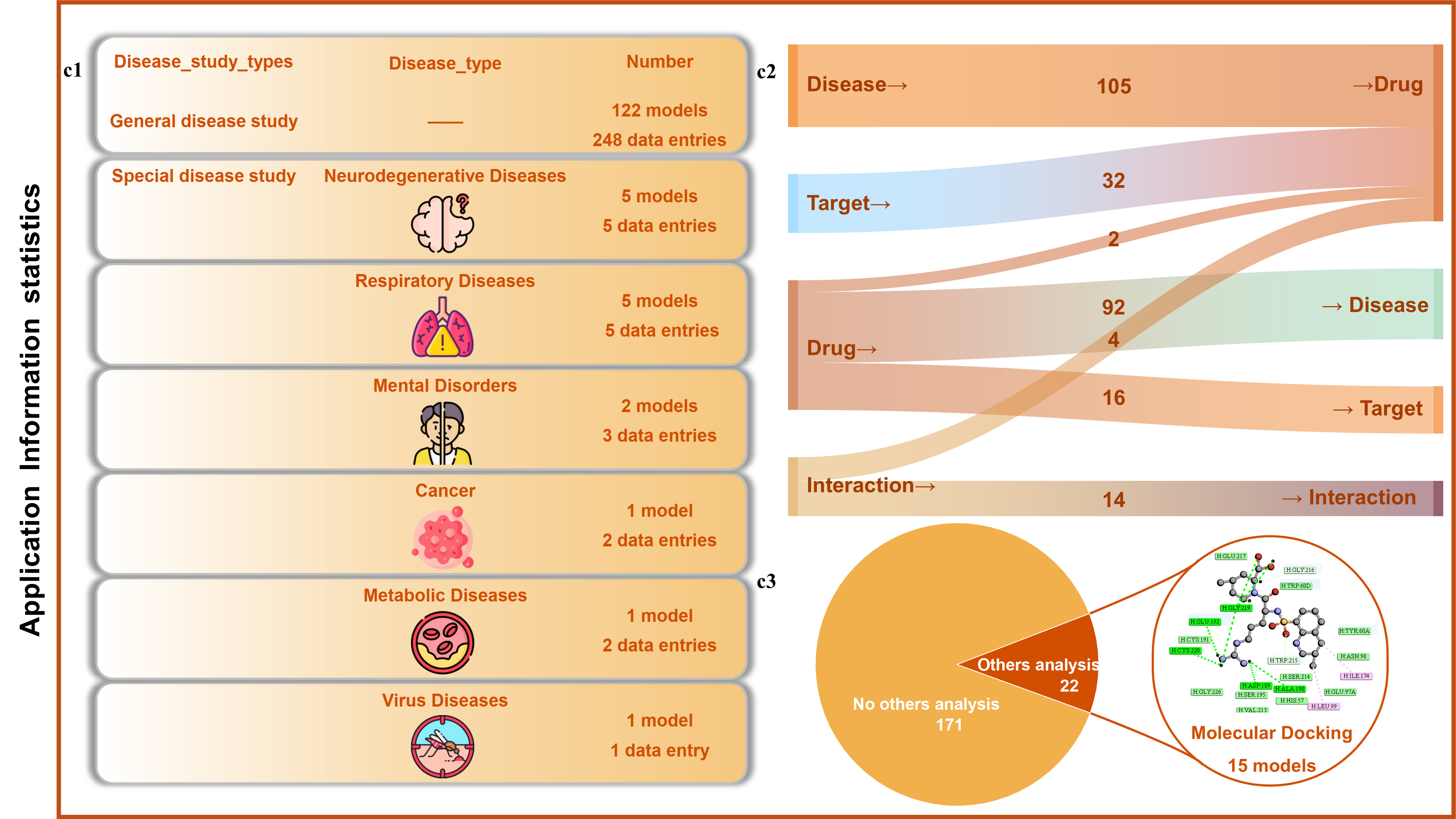
DRPMKB 1.0 is built from PubMed articles up to March 2024. It includes 2 interfaces (display and interaction), 4 dimensions (data, model, application, and reference), 45 categories, 193 models, and 693 entries, offering a comprehensive platform for DR models. The core goal of DR is to find new drug indications. For Alzheimer's disease, DRPMKB 1.0 retrieved 17 models and 84 entries for 126 predicted drugs, 42% of which are neurological, supporting interdisciplinary research and efficient drug identification.
To facilitate a comprehensive and standardized assessment of its incorporated models, DRPMKB 1.0 has established two core evaluation frameworks.
The primary framework is a "Three-Dimensional Evaluation Framework," engineered to systematically appraise the overall quality of the 193 curated models. This evaluation is conducted across three fundamental dimensions: Data, Model, and Application. Each dimension is scored on a scale up to 100, and a final composite score is computed as a weighted average, with contributions of 30%, 40%, and 30% from the Data, Model, and Application dimensions, respectively. This methodology enables a multifaceted assessment of each model's scientific rigor, integrating perspectives on data quality, architectural design, and practical utility.
Furthermore, we have developed a "Level of Evidence (LoE) Evaluation Framework" to ascertain the reliability of predictive outcomes. Recognizing that most models within the database generate predictions substantiated by distinct lines of evidence, this framework is designed to evaluate the robustness of this supporting evidence and its translational potential for preclinical and clinical settings. This is accomplished by assigning a quantitative score to each evidence source, reflecting its scientific rigor and clinical relevance, which in turn provides a robust metric for the credibility of the model's predictions.
Category
(Click the IMAGE to view detail category)
We invite you to explore the insights available on our platform. As we continue to evolve, your feedback will help shape future improvements. DRPMKB 1.0 streamlines access to resources for researchers and developers, laying the groundwork for future updates to version 2.0. It will integrate with LLM to provide a personalized recommendation system, advancing DR research.
|
Model Prediction Types
Links
|